Contents, and how to read it
Nine chapters, about an hour end to end. It is short enough to read straight through, and the chapters are ordered so that each one uses the previous one's conclusion.
Read in order, if you are starting
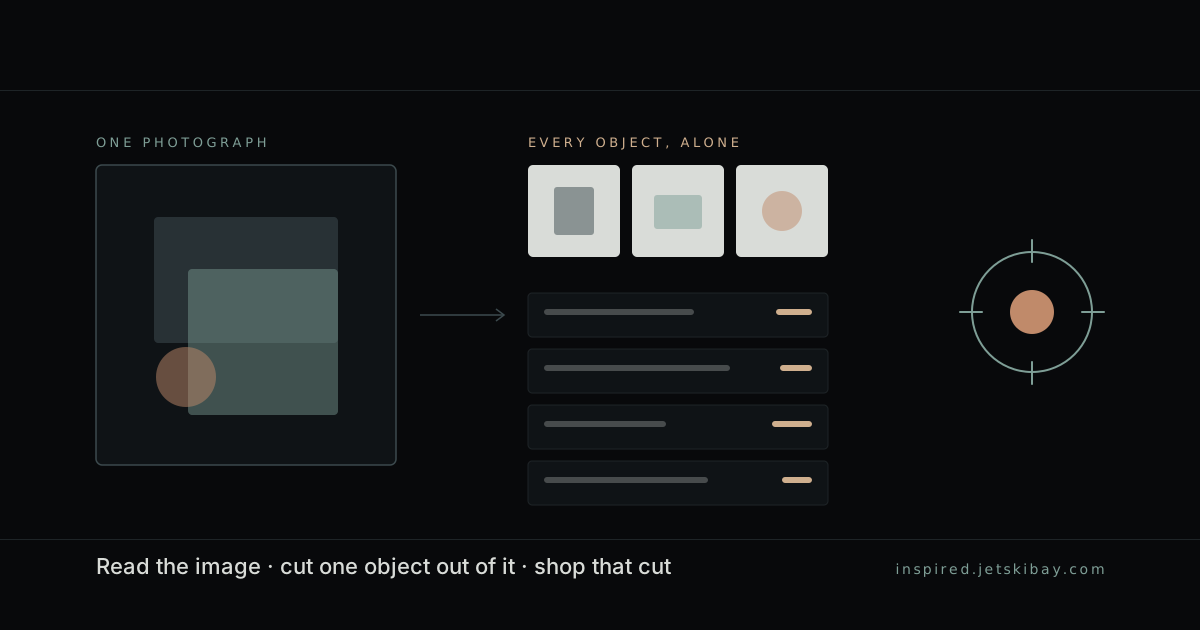
1. What this actually does and 2. The pipeline together explain the one fact everything else follows from: a photograph of an outfit is one image containing six products, so the cut has to happen per object before anything can be searched. That requirement produces the sequential extraction, the multi-minute read, and the whole durable architecture.
3. Durability is the chapter to read before you design a client. It explains why the read is a job rather than a request, and therefore why your client is allowed to be almost nothing.
Read on demand
- 4. Focus domains — before your first non-fashion read.
- 5. Keys and allowance — before you write a retry policy. Especially the charged-at-the-start section.
- 6. The two surfaces — when choosing between HTTP and MCP, or when you want to know what the MCP transport does not implement.
- 7. Reading a result — while writing the code that consumes it.
- 8. Failure — when something breaks. It is a table first, prose second.
- 9. The honesty contract — before you write any user-facing copy.
The four sections worth reading even if you skip the rest
- Chapter 2, "The cut, and why it is sequential." The reason the API is slow, in one page. If you were planning to ask for a faster mode, this is the answer.
- Chapter 5, "Charged at the start." Includes the actual SQL. It explains why ten concurrent calls cannot share one remaining request, and why an empty result still costs you.
- Chapter 7, "Progress, while it runs." How to make a three-minute read feel like progress rather than a hang. The data is already in the response; this is the cheapest quality win available.
- Chapter 9, all of it. Two pages on the words your product may use, and why the constraint is architectural rather than editorial.
Relationship to the other publications
- The visual search guide is the practical companion: what to do, in order, with a shipping checklist. This handbook is the reasoning behind it.
- The article Ask for the shirt, get the vest goes deep on one chapter's worth of material — the extraction prompt — and is the only place the prompt clauses are quoted.
- The focus-domain dataset is chapter 4 as machine-readable data.
- The CLI and the agent skill are the two working clients.
Conventions
A fenced block is either a request, a response or a diagram, never pseudocode pretending to be either. Where a behaviour is a deployment detail that could reasonably change, the text says so instead of presenting it as a guarantee. Field names are written exactly as the API spells them.
Published by Inspired. Fictional brand, working prototype.