Using the library
If you have one hour
Read the guide, Shopping a photograph, end to end. It is the only member written as a task list, and it ends in a ten-point checklist you can run against your own code. Everything else in the collection is either the reasoning behind it, a working implementation of it, or machine-readable data.
If you have one afternoon
- Run the CLI against one photograph.
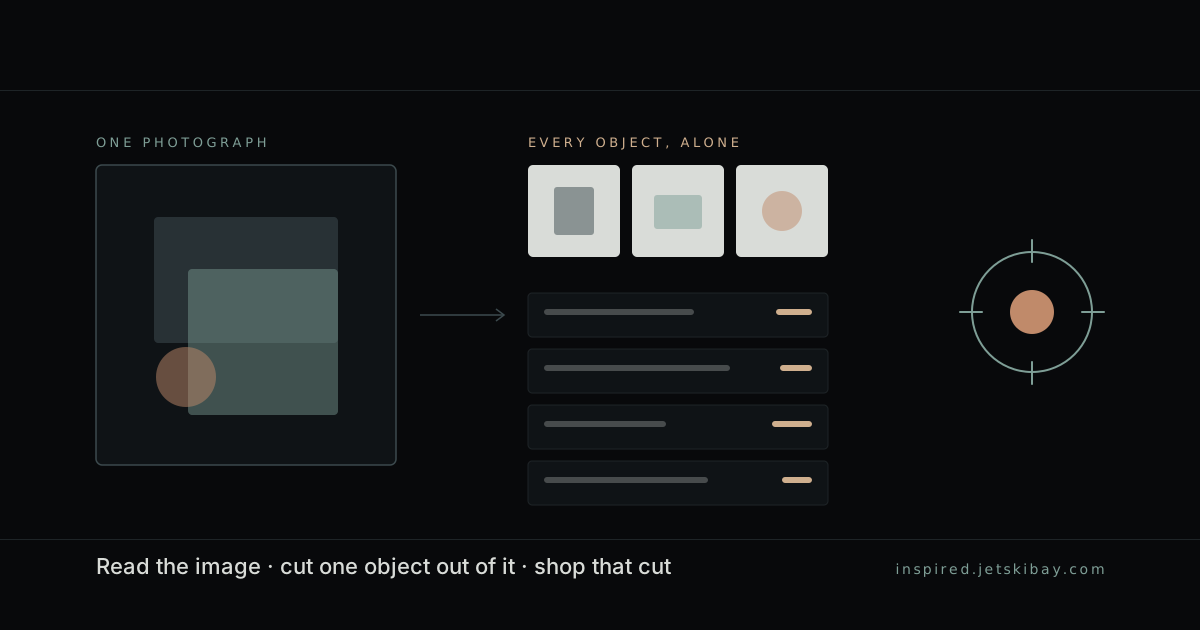
inspired shop photo.jpg --out ./outgives you the payload, the cutouts and the mood board in one command. Keepresult.json— developing against a saved payload instead of live reads is the difference between a ten-request trial key lasting an hour and lasting a week. - Read the guide. Now the field names in it are ones you have seen.
- Read handbook chapters 3, 5 and 7. Durability, allowance, and the result object. These three decide the shape of your client.
- Skim the dataset's schema doc. Two tables and a column list; it tells you
which fields exist per domain so you are not discovering
front_openingat runtime.
If you are running an agent
Install the skill first — it is one file and it prevents the three predictable mistakes (wrong domain, spent allowance, overstated results). Then read handbook chapter 6 so you know what the MCP transport implements, and chapter 9 so you know why the skill is strict about vocabulary.
Give the agent the skill, not the guide. The guide is for you.
If you are building something similar
The article stands alone. It needs no key, no account and no context from the rest of the collection, and its last section separates what was specific to clothes from what was about photographs in general.
Handbook chapters 2 and 3 are the architectural companion: why the expensive step is sequential, and how to draw durable step boundaries around paid calls rather than around code.
Keeping up
Each member carries its own version and changelog. The guide and the handbook
move together when platform behaviour changes; the dataset is regenerated from
the running code on every build, and its analysis_prompt_sha256 column is the
cheapest way to detect that a reading prompt has changed under you.
Getting the files
Every member's page has its own downloads. The collection page has links, not an archive — see the product or tool page for the versioned starter kit if you want one file.
Published by Inspired. Fictional brand, working prototype.