
BTCPay Server
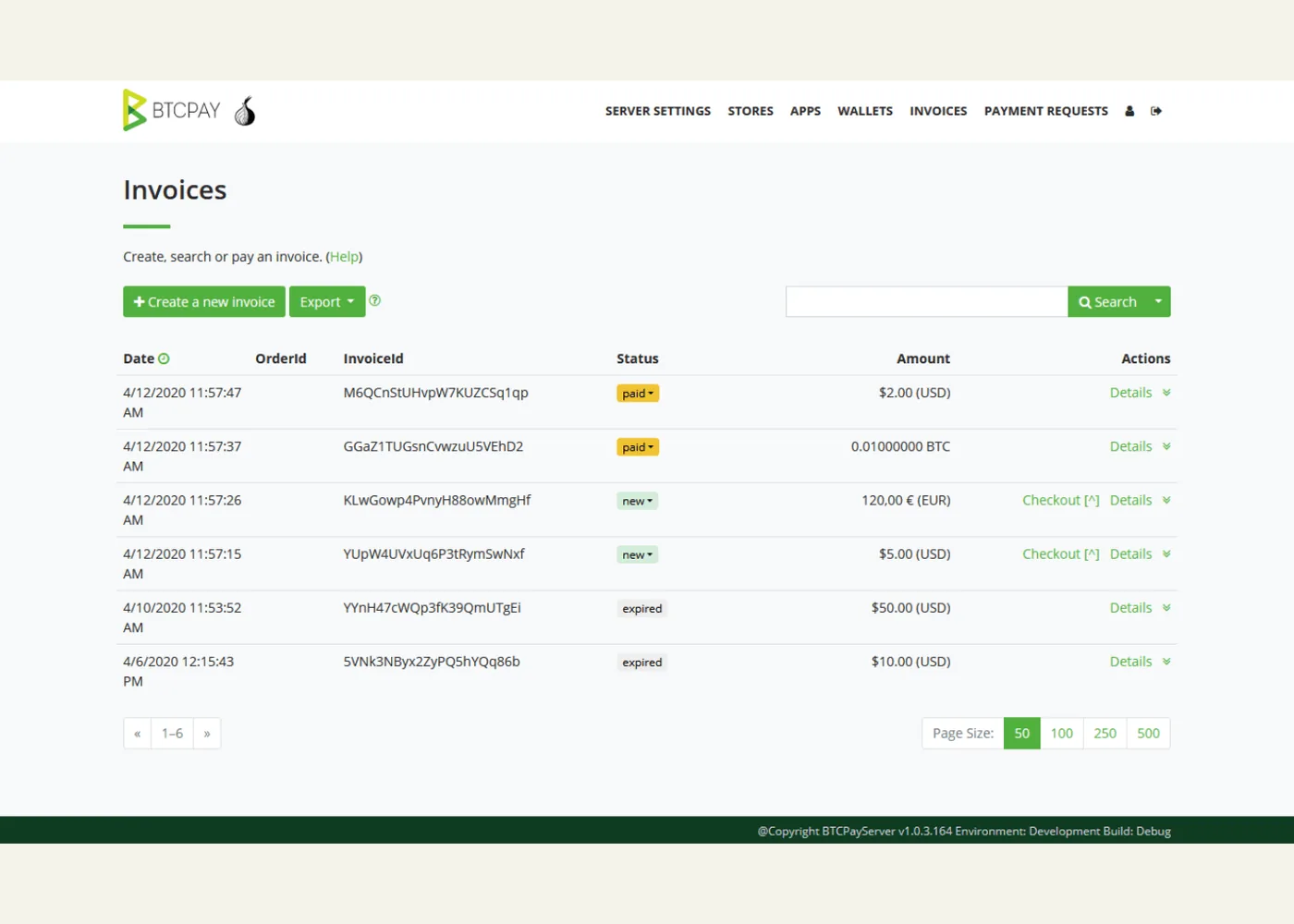
BTCPay Server is an open-source payment application for merchants, developers, and communities that want to accept Bitcoin through their own checkout. It creates invoices, presents a payment page, watches for payment, and records the result so a seller can fulfill an order. Payments go to the wallet connected to the store; BTCPay Server is not a custodian in the ordinary on-chain setup. The project also offers a point-of-sale app, payment buttons and requests, crowdfunding, shopping-cart integrations, and an API. Project site · User guide
The product idea is useful beyond its payment rail: one instance can serve multiple stores while each store keeps its own checkout, wallet, rate, and integration settings. An invoice locks an amount and exchange rate for a limited period, while a payment request can generate fresh invoices for a reusable link. For an online shop, a developer can connect an existing integration or use the Greenfield API and webhooks to respond to invoice events. A seller should act on the configured settled status, rather than assume a broadcast transaction is final. User guide
To try it, choose a deployment method: operate your own instance or register on a third-party host. Create a store, connect a wallet, then issue a small manual invoice and pay it from a separate wallet before connecting a live commerce system. A watch-only wallet can receive without storing spending keys on the server; a hot wallet keeps keys there and changes the security responsibility. User guide · Wallet setup
Self-hosting brings infrastructure work. The project's Docker installation guide recommends a dedicated Linux server for production, with domain, DNS, HTTPS, and sufficient resources for the selected chain and services. The Bitcoin node and payment indexer must synchronize before payments can be reliably detected. Operators handle updates, backups, availability, and recovery; Lightning adds node, liquidity, and backup requirements. A shared host reduces setup work but controls the server and may limit features or see store activity. The software has no processing fee, but hosting and Bitcoin network fees can still apply. Server specifications · Third-party hosting
Example use cases
- Suggested: Add a Bitcoin checkout option to a small web store and fulfill orders only after the invoice reaches its chosen settlement state.
- Suggested: Give a local market stall a point-of-sale screen while keeping its incoming payments in a merchant-controlled wallet.
- Suggested: Study the store, invoice, and webhook model when designing an open-source payment integration with clear operator responsibilities.
Sources
- BTCPay Server project site
- BTCPay Server user guide
- Choosing a deployment method
- Docker installation
- Server specifications
- Third-party hosting
- Wallet setup
- Developer documentation
Source image: BTCPay Server contributors (historical interface screenshot).
Maintained by Jetskibay. Reviewed 2026-09-29T00:00:00Z.